Modern Chicken Breeding Delivers on Welfare and Sustainability

Modern Chicken Breeding Delivers on Welfare and Sustainability

Understanding modern poultry breeding is key to informed decision-making across agriculture, policy and regulation, food systems, and among consumers—especially as our connection to where our food comes from or how it is produced has become more distant.

This Aviagen® resource hub, Chicken Breeding Explained, offers clear, science-based insights into the practices shaping responsible poultry breeding today. Through regularly updated content—including articles and clear explanatory resources—we explore how genetic progress in poultry breeding contributes to advances in sustainable poultry production, animal welfare, and food security. Designed for policymakers, educators, and industry stakeholders, this content offers a transparent, evidence-led look at how these priorities are addressed in practice.
Frequent Questions About Poultry

Frequent Questions About Poultry

General

What is a broiler?

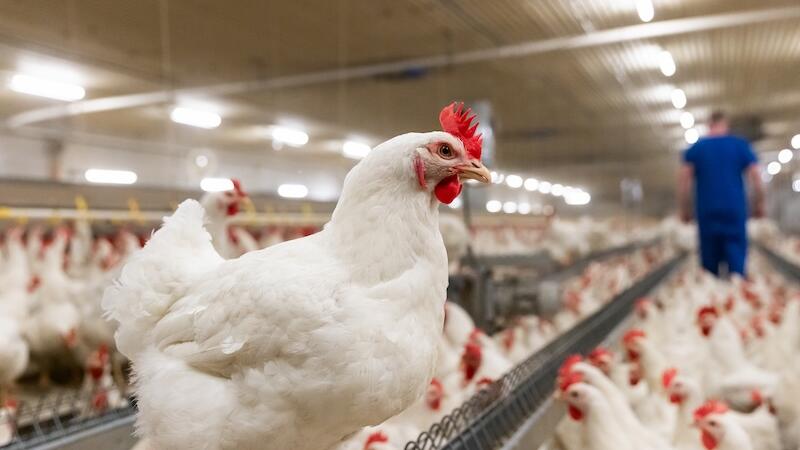
A broiler is a chicken raised specifically for meat production. Broilers are raised on farms and grown to different weights depending on their intended use. Some are sold as whole chickens, such as a rotisserie chicken, while others are processed into different cuts and packaged portions or used in prepared foods such as ready meals, restaurant, or food service products.

What is a broiler breeder?

A broiler breeder (also known in our industry as parent stock) is a chicken that lays the eggs that will hatch into broiler (meat-type) chickens. Unlike broilers, breeders are not raised for meat but are carefully managed to ensure a consistent supply of robust broiler chicks. Without healthy breeders, the supply of chickens for meat would be less reliable.

What is factory farming, and is it bad?

“Factory farming” is a common and misleading term often used to describe large-scale animal agriculture, including but not limited to poultry production. The term is frequently used to imply that intensive agriculture is inherently negative. In reality, modern poultry systems use selective breeding and genetics, responsible management practices, and technology to raise chickens efficiently, while supporting bird welfare, food safety, and security.

Breeding

What is a primary poultry breeding company?

A primary poultry breeding company sits at the very start of the chicken supply chain. Rather than farming chickens for food itself, a poultry breeding company’s role is to carefully select and breed healthy, high-quality chickens suited to the needs of farmers and their specific markets. 

Primary poultry breeding is a long-term process that takes place over several generations of birds through data-driven genetic selection using naturally bred animals. Breeding programs aim to improve animal health, welfare, efficiency, and robustness.

This work matters because chicken is one of the most widely consumed, nutritious, and affordable sources of protein worldwide, and demand continues to grow as the global population increases.

Companies such as Aviagen operate globally, supplying breeding stock that forms the foundation of commercial chicken production systems worldwide. By producing birds that grow efficiently and convert feed into high-quality protein with fewer resources, modern poultry breeding also supports more sustainable food production.

How are chickens genetically selected?

Different types – or breeds – of chicken are selected by identifying birds with desirable traits we want to pass on to future generations of chickens. At Aviagen, this process is enhanced by non-invasive and innovative technologies that improve the accuracy of selection criteria and enable advanced data analysis. This includes analyzing naturally occurring DNA markers associated with beneficial traits, helping breeders make more informed selection decisions. These technologies complement decades of breeding expertise. Together, these methods help produce healthy, productive, and resilient birds naturally, without the use of genetic modification.

Selective breeding itself is a long-established practice across all livestock farming and is also widely used in crop production.

What is balanced breeding?

Balanced breeding means improving several important characteristics in chickens at the same time, rather than focusing on just one.

For example, as productivity traits like growth, meat yield, and feed efficiency improve, equal attention is given to characteristics such as strong leg health, cardiovascular fitness, reproductive fitness, and overall robustness. This approach helps produce chickens that are efficient, healthy, resilient, and well-suited to a variety of environments and production systems.

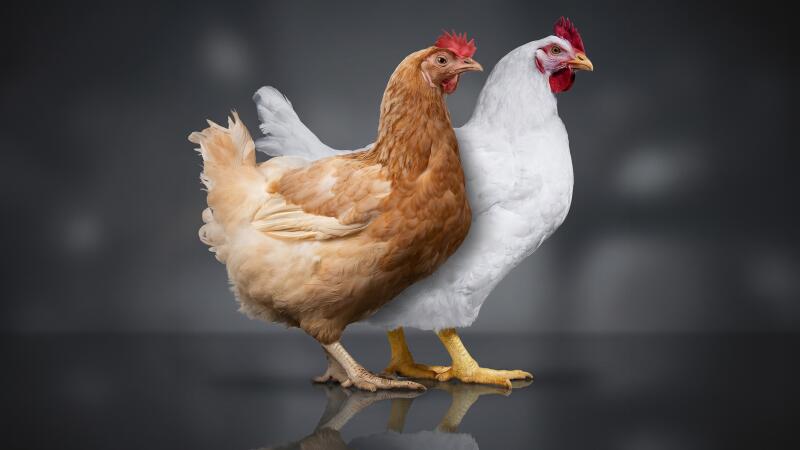
What is the breeding approach for slower-growing chickens?

The balanced selection approach used for slower-growing chicken breeds enables them to meet the evolving breed criteria established by accreditation schemes such as the European Chicken Commitment (ECC) and Beter Leven, making them eligible for accreditation.

What is the breeding approach for faster-growing chickens?

The balanced selection approach used for faster-growing chicken breeds enables continuous improvement across health, welfare, robustness, efficiency, and production traits, ensuring they can meet the diverse requirements of poultry producers, production environments, retailers, and consumers.  By supporting efficient and sustainable poultry production, these breeds help ensure the availability of an affordable source of protein globally.

How much longer do slower-growing broiler chickens live than faster-growing broiler chickens?

Slower-growing broiler chickens are typically raised for 56-84 days, compared with the 35-42 days for faster-growing broilers. This means they are generally reared for 3-6 weeks longer, depending on the production system and the market requirements.

Ross 308

Does the Ross 308 have bad welfare?

No. Any bird, on any farm, can experience poor welfare if conditions are not well managed. The aim is to provide the right environment, care, and management so birds can remain healthy and thrive.

The Ross® 308 is a widely used chicken that has been developed over time with a focus on multiple traits, including health, welfare, and production efficiency. Like all breeds, its welfare outcomes depend heavily on how it is managed, including housing, nutrition, and daily care.

In fact, data suggests that the Ross 308 has much better health and welfare compared to any other faster-growing chicken, especially in terms of good leg health and high liveability. Learn more about how we measure and advance welfare in our Decades of Welfare Report.

Is the Ross 308 only selected for a fast growth rate?

No. Growth rate is one of several characteristics considered in poultry breeding, but it is far from the only focus. Over time, breeding goals have expanded to include a wider range of traits, particularly health, welfare, and robustness. Today, a balanced breeding approach is used. This means improving growth and efficiency alongside characteristics such as leg health, cardiovascular fitness, and overall resilience. The aim is to deliver birds that perform well in different production systems while also maintaining good health and welfare outcomes.

Why are Ross 308 chickens sometimes referred to as "turbo chickens," "Frankenchickens," or similar terms such as "plofkip" and "turbo kylling" in some countries?

These terms are emotive labels often used in public debate about chicken growth rates and animal welfare, particularly when comparing faster-growing chickens with slower-growing breeds. They can be misleading because they imply that modern chickens are produced using unnatural methods.

In reality, faster-growing chickens are the result of decades of careful, data-driven selection and conventional breeding practices focused on a balanced range of traits, including efficiency, health, welfare, robustness, and performance. They are not the result of genetic modification or other unnatural breeding methods.

Growth rate alone does not determine a chicken’s health or welfare. Good welfare outcomes depend on many factors, including genetics, nutrition, housing, management, and biosecurity. Modern poultry breeding programs, therefore, select for a broad range of characteristics, including livability, mobility, robustness, and overall welfare outcomes alongside growth and production traits.

How good is the Ross 308 as regards sustainability?

Sustainability is a key objective in poultry breeding, and together with welfare and efficiency, is one of the goals of our balanced breeding approach. Feed efficiency is important because it directly affects environmental impact; for example, land use, water and energy consumption.

The Ross 308 is a leader in sustainability as it has an excellent Feed Conversion Rate (FCR), i.e., the rate at which the bird converts feed to live weight. The FCR improvement of the Ross 308 is 1 – 2 points, which leads to a 1% annual reduction in CO2. While this may sound small, when applied across global broiler production, it represents a substantial environmental impact. It is similar to improving the fuel efficiency of millions of cars at the same time – small efficiency gains at an individual level translate into significant reductions in fuel use, resource consumption, and emissions worldwide.

Welfare

Which has better welfare, slower-growing or faster-growing broiler chicken?

There is no single answer to this question. Welfare depends on many factors, including genetics, housing, nutrition, and management. Growth rate is one of those factors, and all of our breeds of chicken are bred to stay healthy, irrespective of how quickly they grow.

Slower-growing broilers take longer to reach market weight, while faster-growing broilers reach market weight sooner and are typically more feed-efficient. Both types are bred to stay healthy and perform well, and with proper care and management, can achieve very good welfare outcomes.

Apart from genetics, what are the other influences on bird welfare?

Bird management factors have a very large impact on bird welfare. Factors such as housing, nutrition, ventilation, lighting, litter quality, flock health, stocking density, and daily care all play an important role in bird well-being. Good welfare outcomes depend not only on genetics but also on responsible management practices and high standards of care throughout the bird’s life

Do primary poultry breeders only focus on growth?

No. Modern poultry breeding takes a balanced approach, selecting for a wide range of traits including growth, yield, health, welfare, reproduction, and adaptability to different production systems. The goal is to produce birds that are efficient, resilient, and suited to various market conditions, rather than optimizing for any single trait alone.

Sustainability

Is chicken production bad for the environment?

All food production has an environmental impact, including chicken. Compared to other animal proteins, chicken is more environmentally friendly. Modern broiler production focuses on feed efficiency, responsible resource use, good nutrition, and sound management practices to produce high-quality, affordable protein while minimizing the environmental impact.

In fact, advances in broiler breeding show that the carbon footprint of broilers has decreased by roughly 55% over the past 50 years (1972-2022).

Which is better for the environment, slower-growing or faster-growing chicken?

Faster-growing chickens are generally more resource-efficient because they reach market weight sooner, using less feed, water, and energy per bird. Slower-growing chickens take longer to reach the same market weight, which requires more resources over time.

How has poultry breeding improved productivity and sustainability?

Over recent decades, significant progress in poultry breeding has helped improve both productivity and sustainability across the broiler industry. Through balanced, data-driven selection and selective breeding, we have delivered birds that are more efficient at converting feed into high-quality protein, while also supporting strong health, welfare, and overall robustness. These improvements help reduce resource use per kilogram of chicken meat produced, contributing to more sustainable food production and greater affordability for consumers worldwide.

To learn more about how these advancements have been achieved, watch this animation.