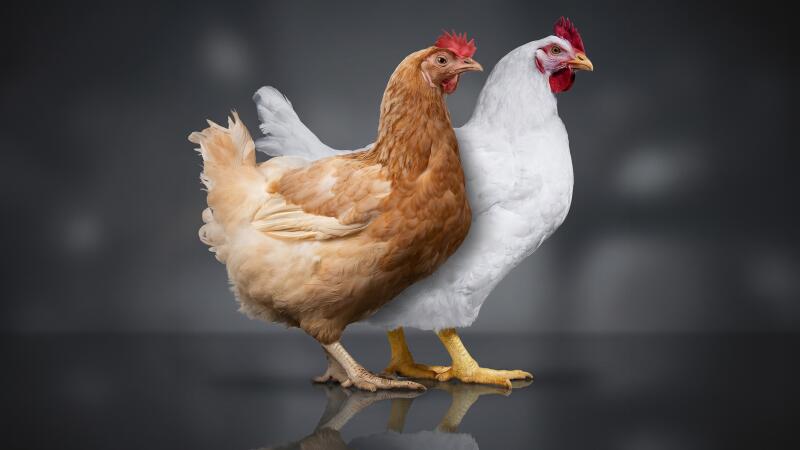
Chicken Breeding Explained

Modern Breeding Delivers on Welfare & Sustainability

Lorem ipsem text for mock up Aviagen is passionate about the wellbeing of our birds, and bird welfare permeates every aspect of our operations. In fact, over one third of the selection focus of our breeding program is on health and welfare traits. We are proud to say our efforts are paying off in the field with continuous improvements in leg and gait health as well as other welfare traits.

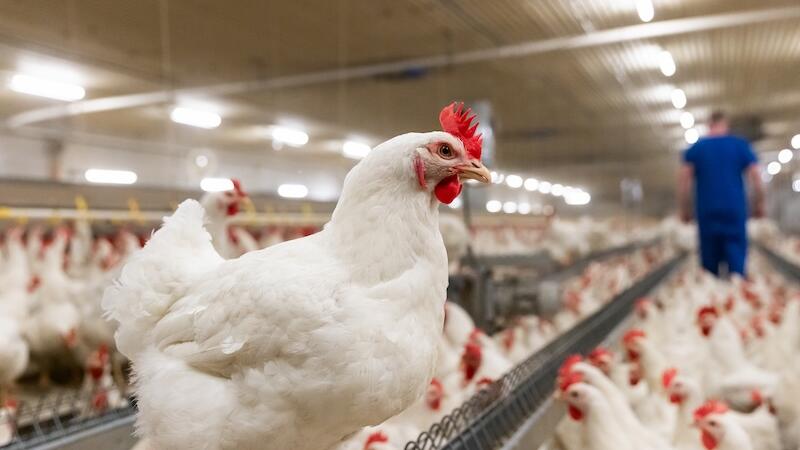
Man holding white chicken 800x600

Common Questions About Poultry Breeding

Q. What is primary poultry breeding?

A. Primary poultry breeding focuses on developing the parent stock (broiler breeders) that supplies healthy chicks to poultry meat producers around the world. Through advanced genetics and careful selection over generations, breeding programs aim to improve animal health, welfare, production efficiency and robustness.

Aviagen is a global leader in primary poultry breeding, providing breeding stock to poultry producers worldwide as part of its mission to help feed the world with affordable, nutritious chicken.
By producing birds that grow efficiently and convert feed into high-quality protein with fewer resources, modern poultry breeding also supports more sustainable food production.

Q. What is a broiler?

A. Broilers are chickens bred specifically for meat production. They are selected for traits like growth rate, feed efficiency, meat yield, health and welfare. Broilers are raised to different weights depending on whether they will be sold whole, as cuts, or used in value-added products like ready-to-cook and ready-to-eat foods.

Q. What is a broiler breeder?

A. A broiler breeder is a parent bird that lays the eggs that will hatch into broilers. Unlike broilers, breeders are not raised for meat but are carefully managed to ensure a consistent supply of healthy chicks. Without healthy breeders, the supply of meat chickens would be less reliable.

Q. How are chickens genetically selected?

A. Chickens are selected through careful breeding programs that identify parent birds with desirable traits. At Aviagen, this process is enhanced by innovative technologies that improve the accuracy of selection criteria and enable advanced data analysis, combined with decades of breeding expertise. These methods help produce healthy, productive, and resilient birds naturally, without the use of genetic modification.

Q. Are Aviagen chickens genetically modified?

A. No. Aviagen chickens used in modern poultry production are not genetically modified. Instead, poultry breeding uses balanced breeding – choosing parent birds with desirable traits like good growth, feed efficiency, meat yield, leg health, cardiovascular fitness, and welfare, then mating them so those traits are passed to the next generation. Aviagen considers more than 40 different traits in its breeding program, improving bird health, welfare, and performance simultaneously rather than focusing on a single characteristic. This is a natural process that has been used for decades to strengthen flocks. It does not involve adding or altering genes artificially, so chickens are not GMOs.

Q. What is balanced breeding?

A. Aviagen’s balanced breeding approach is a genetic selection strategy that advances multiple traits at the same time—health, welfare, sustainability, and production performance. As productivity traits like growth, meat yield, and feed efficiency improve, equal attention is given to characteristics such strong leg health, cardiovascular fitness, reproductive fitness and overall robustness. This approach helps produce chickens that are efficient, healthy, resilient, and well-suited to a variety of environments and production systems.

Q. What is considered good chicken welfare?

A. Good chicken welfare means that birds are healthy, comfortable, and able to express natural behaviors. It reflects the overall well-being of the bird and is guided by widely recognized principles like the Five Freedoms. Genetics, housing, nutrition, management, and care all play a role in supporting good welfare.

Q. Are chickens raised with hormones or growth promoters?

A. No. Chickens grow efficiently through selective breeding, balanced nutrition, and careful management, which naturally supports healthy growth. Using hormones or growth promoters is illegal in many countries, including the US and EU. Poultry production therefore relies on good genetics and husbandry practices rather than artificial growth promoting substances.

Q. Is chicken production bad for the environment?

A. Like all food production, chicken production uses natural resources, but is more environmentally efficient than many other sources of animal protein. Modern broiler production focuses on feed efficiency, responsible resource use, good nutrition, and sound management practices to produce high-quality, affordable protein while minimizing the environmental impact.

In fact, advances in broiler breeding shows that the carbon footprint of broilers has decreased by roughly 55% over the past 50 years (1972-2022).

Q. Which has better welfare, slower-growing or faster-growing chicken?

A. Welfare depends on many factors, including genetics, housing, nutrition and management, not just growth rate. Slow-growing broilers take longer to reach market weight, while faster-growing broilers reach market weight sooner and are typically more feed-efficient. Both types are bred to stay healthy and perform well, and with proper care and management, can achieve good welfare outcomes.

Q. Which is better for the environment, slower-growing or faster-growing chicken?

A. Faster-growing chickens are generally more resource-efficient because they reach market weight sooner, using less feed, water, and energy per bird. Slower-growing chickens take longer to reach market weight, which requires more resources over time.

Q. How long does a breeder chicken typically live?

A. Breeder chickens are managed to produce fertile eggs for hatching chicks and typically live around 60-65 weeks. During this time, they are carefully managed for health, welfare, and egg production to ensure a consistent supply of healthy chicks for broiler production.

Q. How long does a typical, faster-growing broiler chicken typically live?

A. The lifespan of a broiler chicken depends on the target market weight, which is influenced by how the chicken will be sold – for example, whole birds, cuts, or processed product. A general average is between 5-8 weeks, during which time birds are carefully managed to support health, welfare, and efficient growth.

Q. How many weeks longer does a slow-growing broiler live compared to a faster-growing broiler?

A. While some people may assume that slow-growing broilers live for months longer than conventional, faster-growing broilers, in reality, they are typically raised only about 2-3 weeks longer.

Q. Do broiler breeders only focus on growth?

A. Modern breeding balances growth, yield, health, welfare, reproduction, and adaptability to different production systems. The goal is to produce birds that are efficient, resilient, and suited to various markets.

Q. You may have heard terms like ‘turbo chicken’ or ‘frankenchicken’ online—are these real types of chickens or misleading nicknames?

A. These terms are misleading nicknames used online to criticize fast-growing chickens. In reality, faster-growing chickens are the result of selective breeding that focuses on efficiency, health, and welfare, not through unnatural methods.

Q. What is factory farming, and is it bad?

A. “Factory farming” is a misleading term often used to describe large-scale poultry production. It was coined to suggest that intensive production or intensive agriculture is inherently negative. In reality, modern poultry systems use advanced breeding, responsible management practices, and technology to raise chickens efficiently, while supporting bird welfare, food safety, and security.

What is selective breeding?

What is selective breeding?

Watch the video.

The poultry supply chain explained

The poultry supply chain explained

Watch the video

What is balanced breeding?

What is balanced breeding?

Watch the video.

Aviagen Welfare and Chicken Breeding Glossary

[what is this info from Word doc?]

Genetics and welfare set the potential, but nutrition, management, and environment determine actual growth, health, and performance.
Improving broiler performance is a long-term process. From selecting the very best chickens at the Pedigree level to seeing results in commercial broilers can take 5-6 years, requiring careful research, analytics in welfare, nutrition, environment, and management – a major investment for breeder companies.
Why does it take so long? Improving broiler performance involves multiple generations – selecting the best Great-Grandparent, Grandparent, and Parent Stock chickens with careful attention to welfare, nutrition, and management, to produce the best commercial broiler chickens. Each generation takes time to grow, reproduce, and pass on the desirable traits.